How to Choose Climbing Shoes: The Expert Guide
Mastering Fit, Technology, and Performance Engineering
1. The Science of the 3-Force System
At the heart of Ocún performance is the patented 3-Force System. Unlike traditional shoes that may twist under pressure, this system stabilizes the forefoot against internal rotation. This allows you to direct 100% of your power onto the smallest “micro-edges,” a feature that makes the Ozone a world-class competition tool.
2. Understanding Lasts and Toe Shapes
A “Last” is the foot-mold the shoe is built on. In our catalog, we categorize these to match human anatomy:
Asymmetrix
Highly curved for competition precision.
Excentric
Aggressive downturn for steep bouldering.
Entratic
Neutral profile for beginners and long days.
Pro Tip: Identify your toe type—Egyptian, Greek, or Cube—to find the Last that mirrors your natural foot shape for maximum comfort.
3. Materials: Microfiber vs. Rubber
Our shoes utilize Synthetic Microfiber Leather. Why? Because unlike natural leather, microfiber does not stretch over time. This means the Ozone Lady you buy today will feel exactly the same six months from now.
For friction, we trust Vibram XS Grip for high-end performance and Grippin’ DURA for our Rental shoes, ensuring a balance between elite “stickiness” and long-term durability.
4. Sizing for Success
The old myth that climbing shoes must be painful is over. You want a performance fit: your toes should be slightly curled to provide power at the tip, but there should be zero “dead space” in the heel. Our seamless heel design (pioneered in 1994) ensures that even a tight fit remains comfortable for the Achilles tendon.
Expert Recommendations
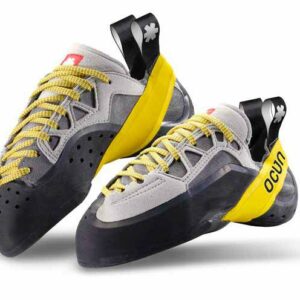
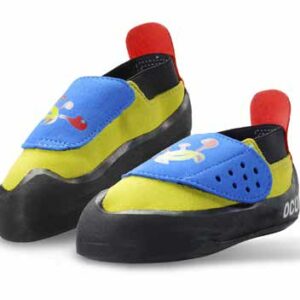
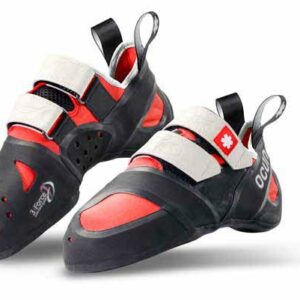
We have selected these three models specifically to cover the needs of the whole family, from budding young heroes to professional competitors.